Don’t guess it’s going to heal.
Know it’s going to heal.

An 80-year-old gentleman presented with a history of pain and a small swelling on the buccal gingiva adjacent to tooth #31. In older patients with calcified canals, it is not uncommon for a lateral root lesion to develop before an apical lesion, as bacteria progresses from coronal to apical. These can give the impression that the tooth is cracked or periodontally involved — when in reality the lateral root lesion developed from a necrotic lateral canal.
The radiographs did not show anything significant.
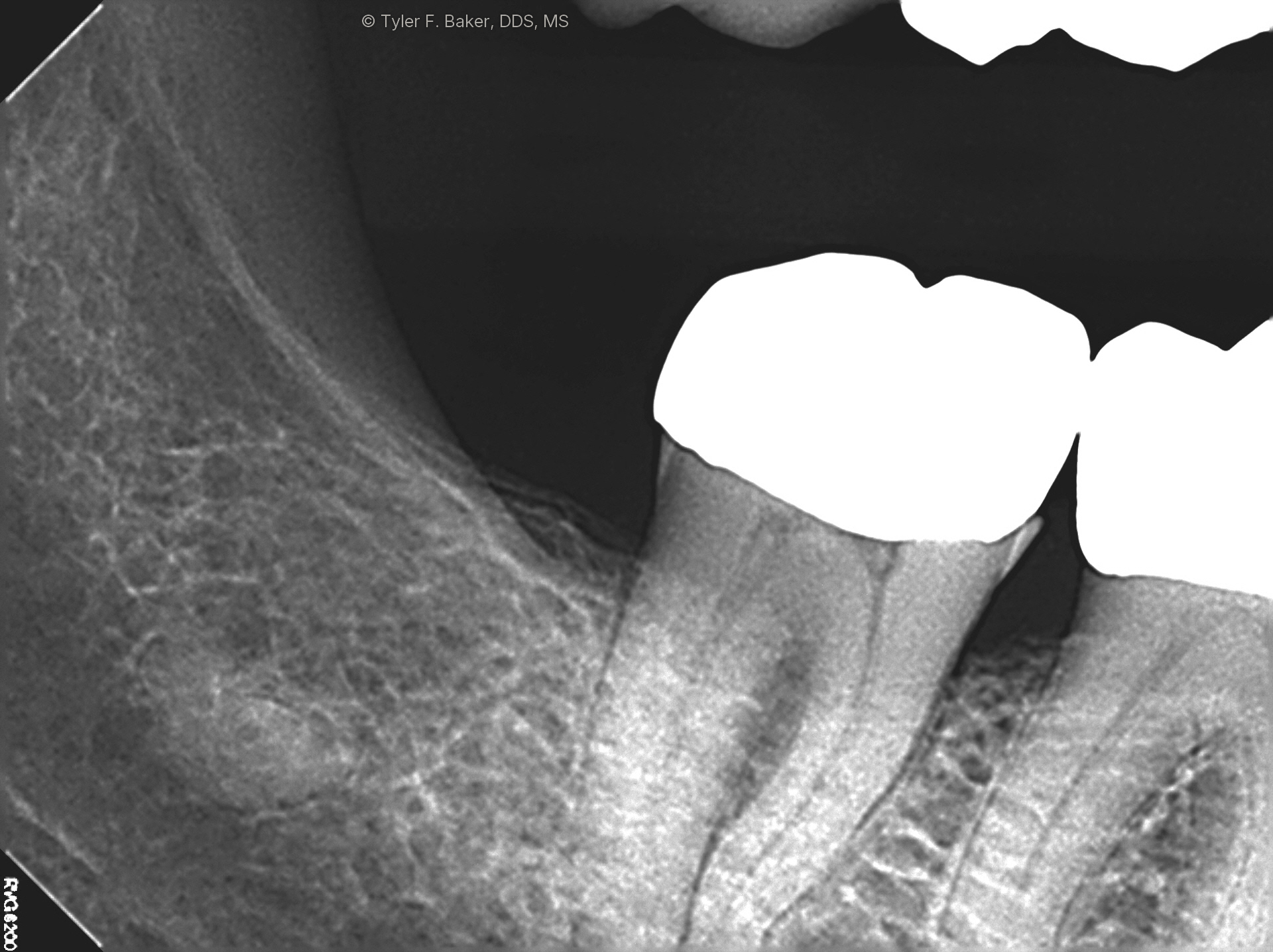
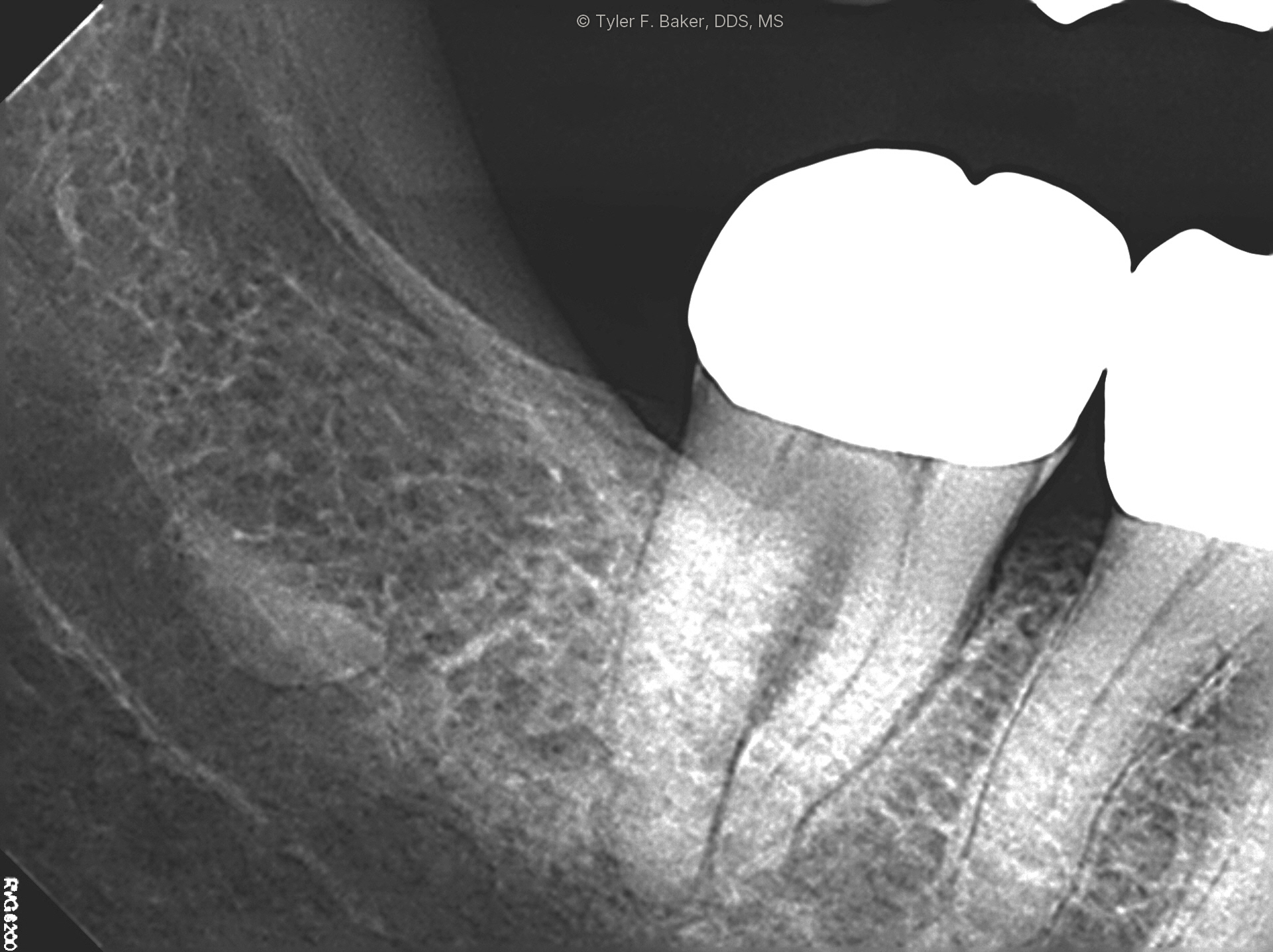
Pre-operative, #31.
Nothing to point at, other than calcifications running down the canals.
Is the CBCT showing Perio or Endo?
The CBCT was somewhat unremarkable, with a widened apical PDL — but not significant enough to cause a swelling. The furcation, however, showed a radiolucency.
It is not uncommon for this root configuration to develop periodontal bone loss in a narrow furcation over time. But with no significant probing depths and no pulpal response, the furcation lesion had a greater chance of being endodontically related.
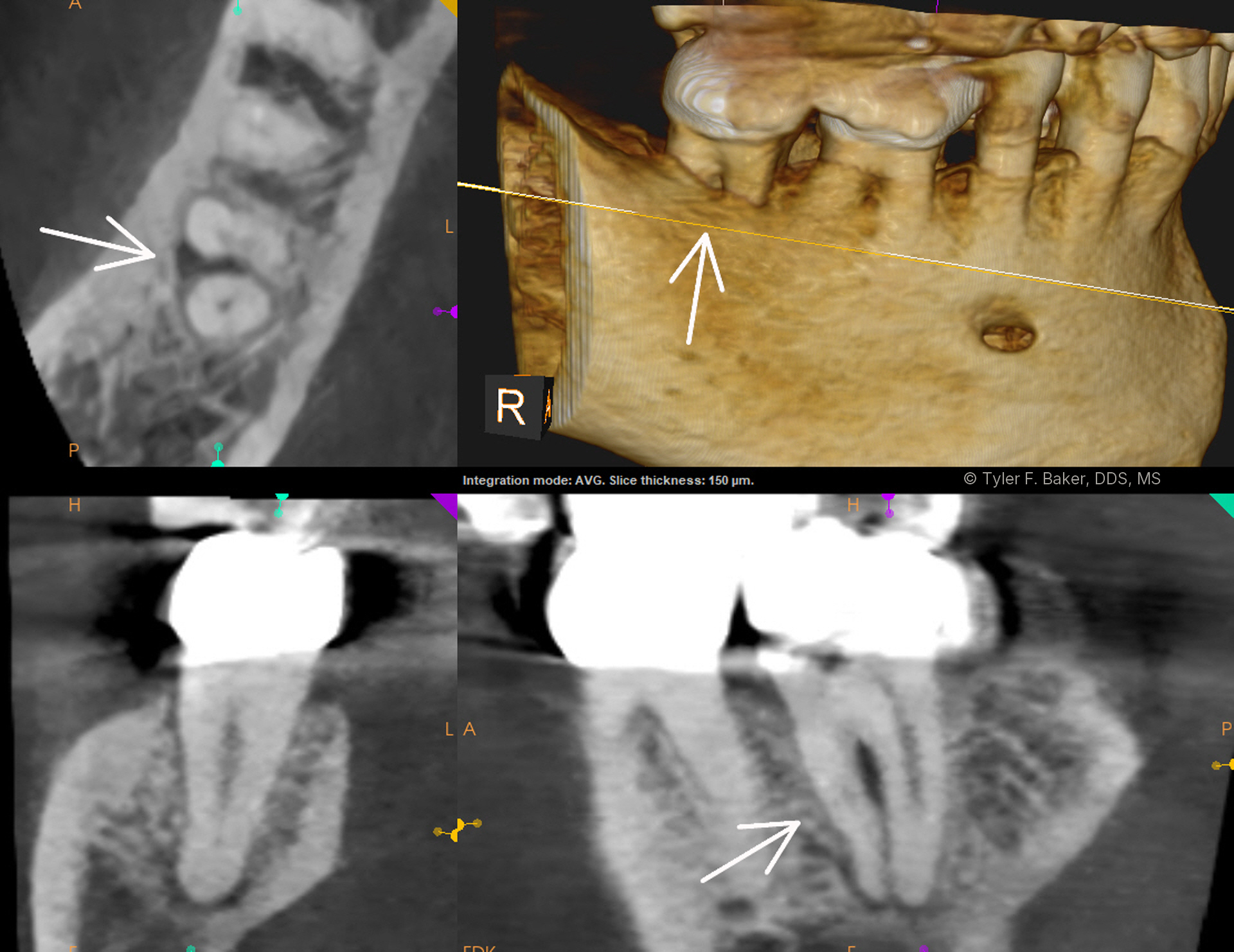
The furcation, in all three planes.
Many would elect to perform a single-visit root canal and give antibiotics — potentially giving a false sense of success.
The ideal protocol is to properly clean the canal system and medicate with calcium hydroxide for at least one week, without prescribing antibiotics. If proper cleaning of the canal system has been achieved, we will see healing of the fistula at the follow-up obturation visit — and know with close to 100% certainty that the tooth will heal and the bone will fill back into the furcation.
An antibiotic can quiet a fistula for a week. Only a clean canal system closes it.
Lateral before apical.
As noted in the last newsletter, cleaning these lateral canals — and not blocking them with debris — is critical to the success of treatment.
Bacteria travels coronal to apical, so can osseous lesions as they develop from a lateral canal before an apical canal as the pulp necroses.
In this case, the buccal fistula resolved after cleaning and medicating the canals. Minimal access, minimal instrumentation, and enhanced irrigation were employed to ensure thorough cleaning and long-term strength. We can rest assured the furcation bone will have filled in at the one year recall.
As always, every image is from our own cases.
— Tyler Baker