Root Canal Retreatment · San Marcos, North County San Diego
Root canal retreatment: a second chance for the tooth.
Retreatment means reopening a tooth that has already had a root canal, removing the old filling material, cleaning what was missed, and sealing it again. It is often the way to keep a tooth that would otherwise be extracted.
In Short
When a root canal needs a second look.
Why it happens
A missed canal, bacteria left in complex anatomy, a leaking or delayed crown, new decay, or a crack.
How it shows
Pain on biting, swelling or a pimple on the gum. Or nothing at all: many are found on an X-ray.
How we find it
A 3D scan often tells a different story than a regular X-ray. See a case.
Your options
Retreatment, root-end surgery, or extraction. We tell you which we would choose and why.
A Real Case
Looks fine on an X-ray. The 3D scan disagrees.
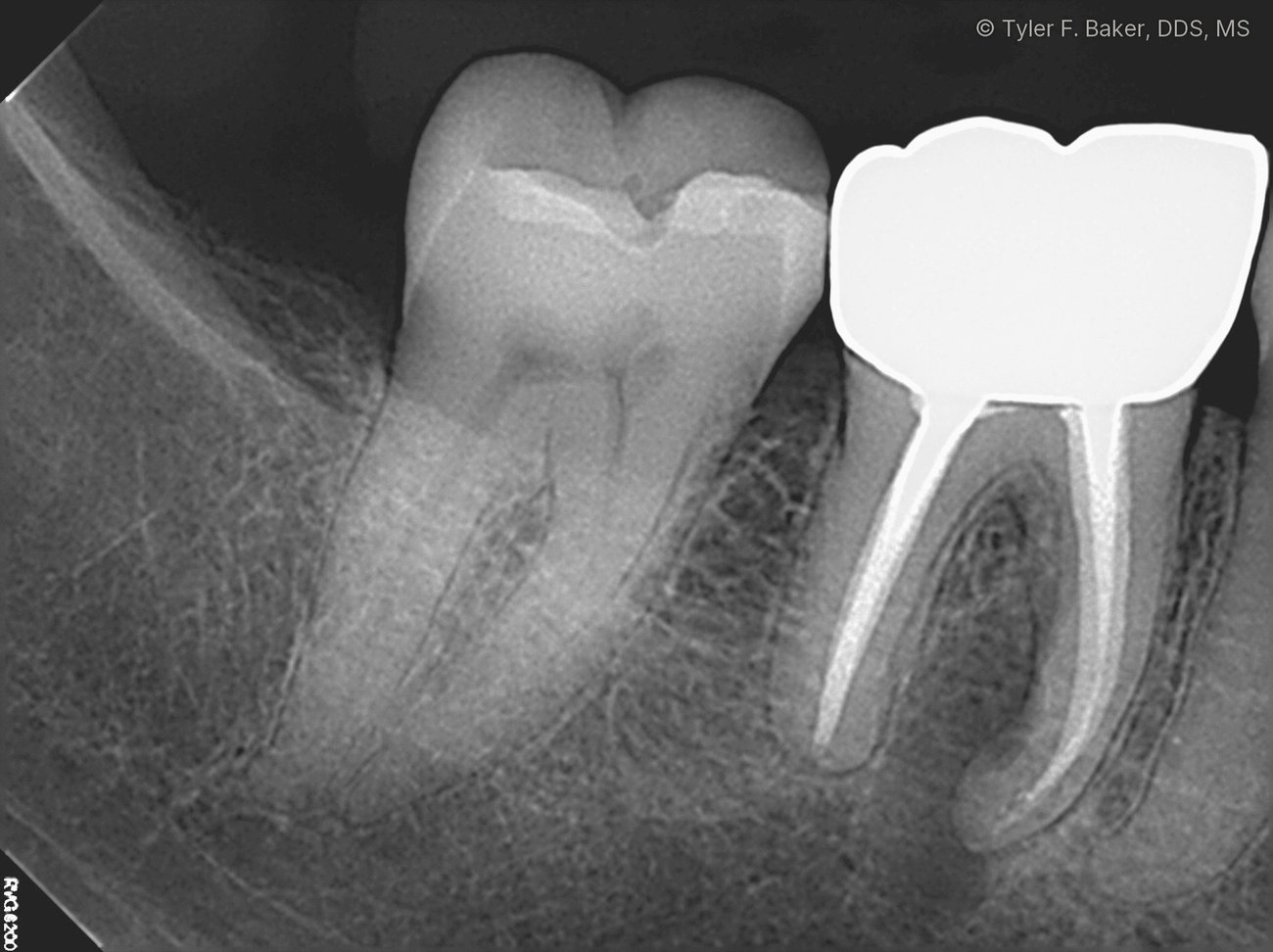
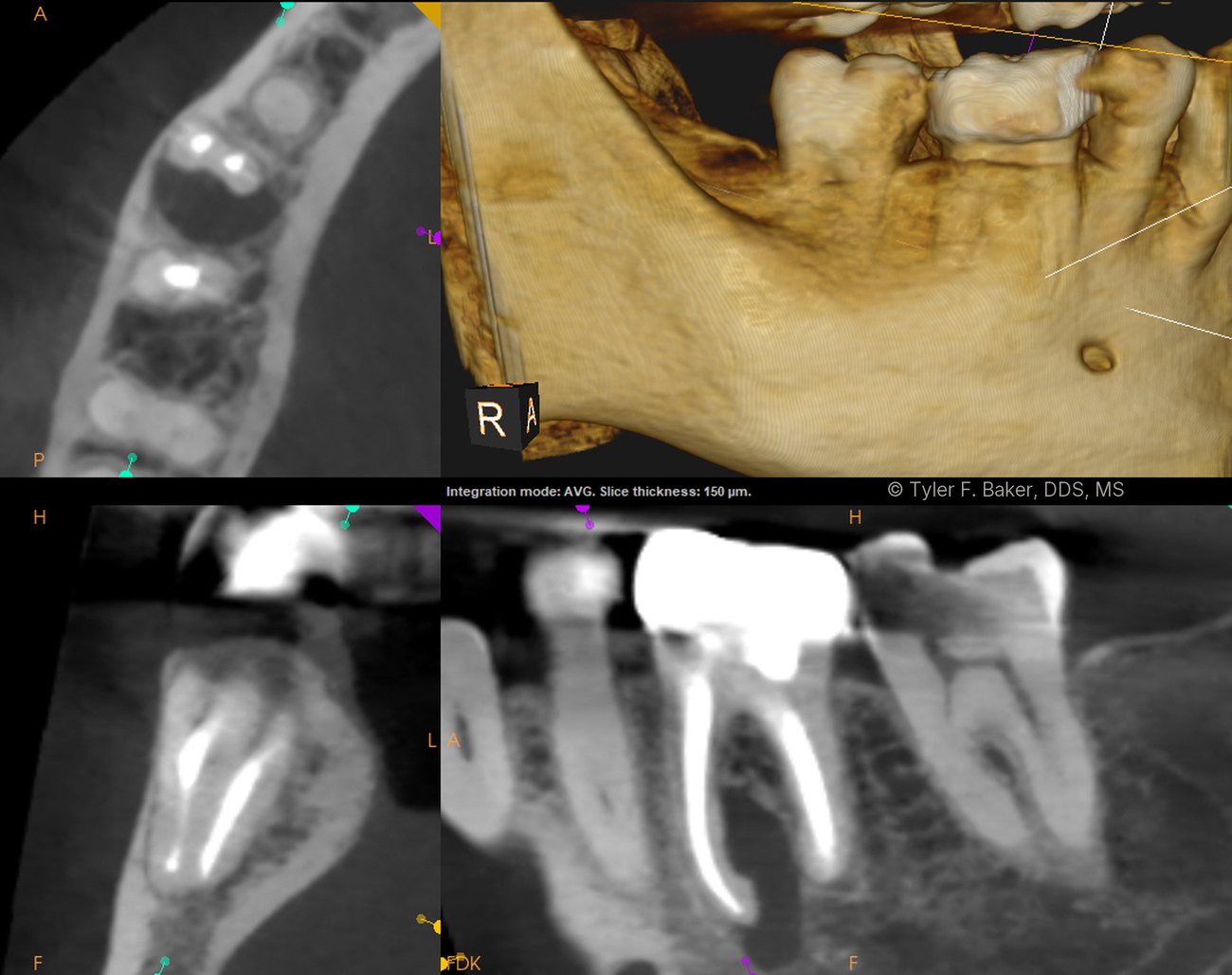
Radiographs from our office, identified by tooth number only. Shown as an example. Every case is different, and results vary.
The Visit
How retreatment is done.
Find the reason
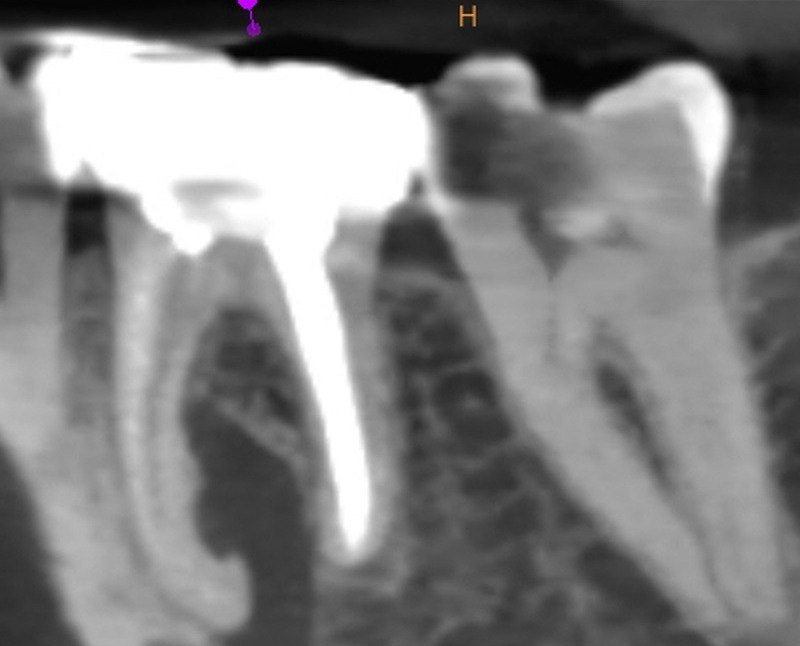
A cone beam CT scan and an examination under the microscope show why the first treatment did not heal: an untreated canal, a short or leaking filling, a crack. The reason decides whether retreatment makes sense.
Reopen the tooth
We work through the existing crown when we can, and remove any post and the old root filling.
Clean what was missed
Missed canals are located under the microscope. The canal system is cleaned again, with laser-activated irrigation (Fotona SWEEPS) for the branches and fins that instruments cannot reach.
Seal it again
The canals are filled and sealed. Some teeth are medicated between two visits first, depending on the infection.
Follow the healing
We recall the tooth and compare images, because the aim is evidence of healing, not hope.
In Our Office
Reading the reasons in three dimensions.
- Carestream cone beam CT to see untreated canals and hidden infection
- A Zeiss surgical microscope to locate what was missed
- Fotona LightWalker laser cleaning (SWEEPS), included in standard care
- Recall images to confirm healing
- A written report to your general dentist
Common Questions
What patients ask about retreatment.
My root canal was years ago. Can it fail now?
Yes. A tooth can be comfortable for years and then develop a problem, for example when a crown starts to leak, decay returns, or bacteria that were sealed in find a path. Some of these teeth never hurt and are discovered on a routine X-ray.
Retreatment or apicoectomy?
Retreatment goes back through the top of the tooth to clean the whole canal system. An apicoectomy treats the root tip from the side, through the gum. Retreatment is usually the first choice when the canals can be reached. Surgery is considered when they cannot, for example behind a long post, or when a well-done root canal has still not healed.
Is retreatment worth it compared with an implant?
When the tooth has sound structure and the reason for the failure can be corrected, keeping it is usually the better long-term choice. If the tooth is cracked through or cannot be restored, an extraction is the honest recommendation, and we will say so.
Will I need a new crown?
Sometimes the existing crown can be kept and the small opening sealed. If the crown is leaking or has decay under it, your dentist will replace it.
How many visits does it take?
Often one or two. Removing old materials takes longer than a first-time root canal, and some infections are medicated between visits.
Should I bring my old X-rays?
They help, especially films from before and after the first treatment, but they are not required. We take our own images, including a 3D scan when it is needed.

Reviewed by Tyler F. Baker, DDS, MS, endodontist. Last reviewed November 2026.
General information, not a diagnosis. Every tooth is different, and results vary. About Dr. Baker
Sources and further reading: American Association of Endodontists, patient information
Questions about your tooth?
Call (760) 510-1133 or request a visit. No referral is needed.