ROOTRizz
Periodic Newsletter · Vol. 04
Retraining your standard.

Product Defect.

The Root Canal Ruining Endodontics,
Yet Performed by Endodontists
Scroll to begin
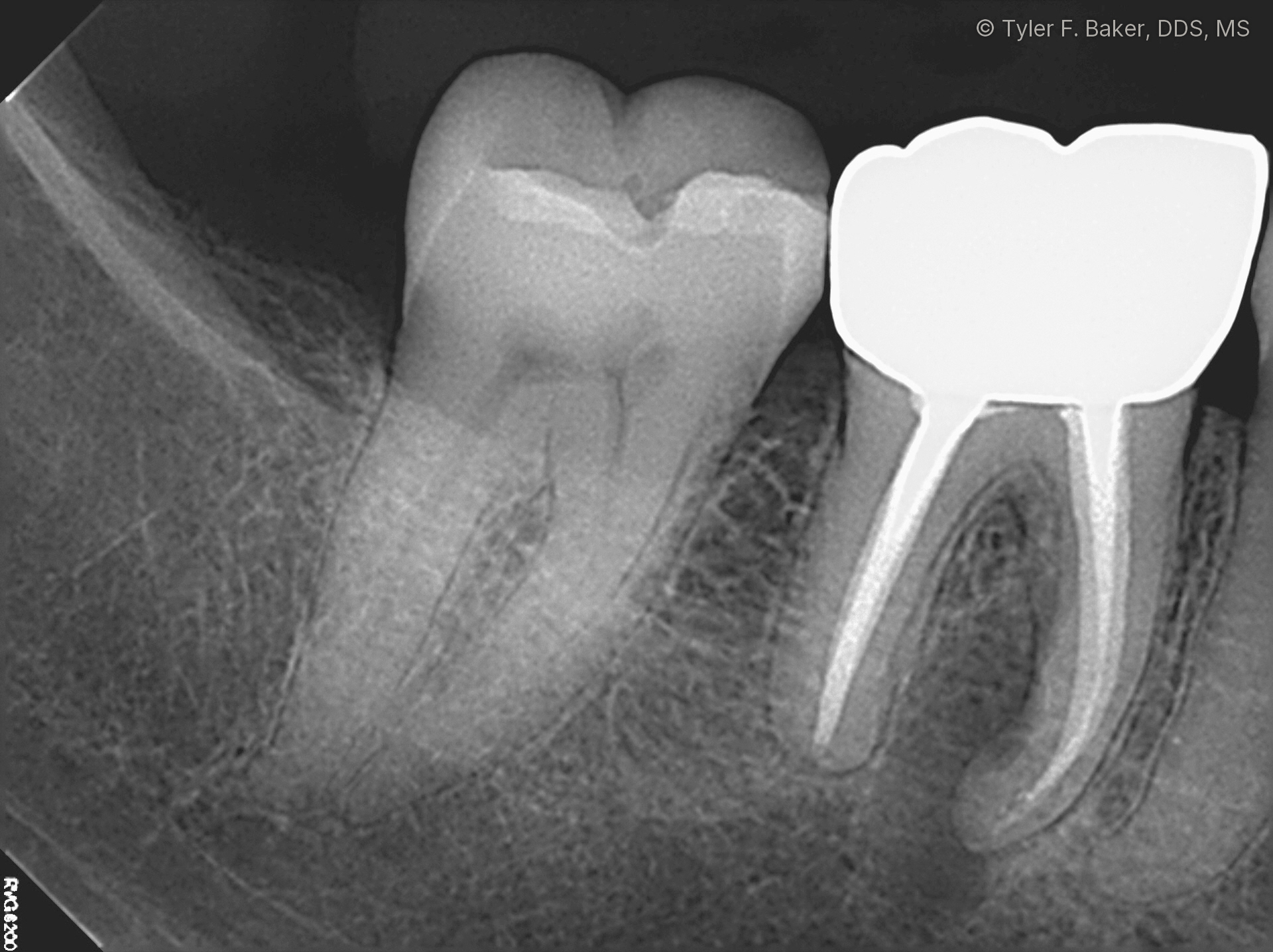
Tooth #30
Periapical x-ray of treated tooth #30
PA · POST-OPERATIVE · TOOTH #30
Initial Presentation

A “successful” root canal.

A mandibular molar, previously treated by an endodontist, appears to have a conservative access and well-filled roots. By standard 2D radiographic criteria, the case appears well cleaned and obturated. The patient was referred to our office with recurring symptoms after the treatment had initially been praised for its quality. CBCT analysis reveals six discrete failure modes — each invisible on the post-operative radiograph, and each a significant risk to the success of the tooth.
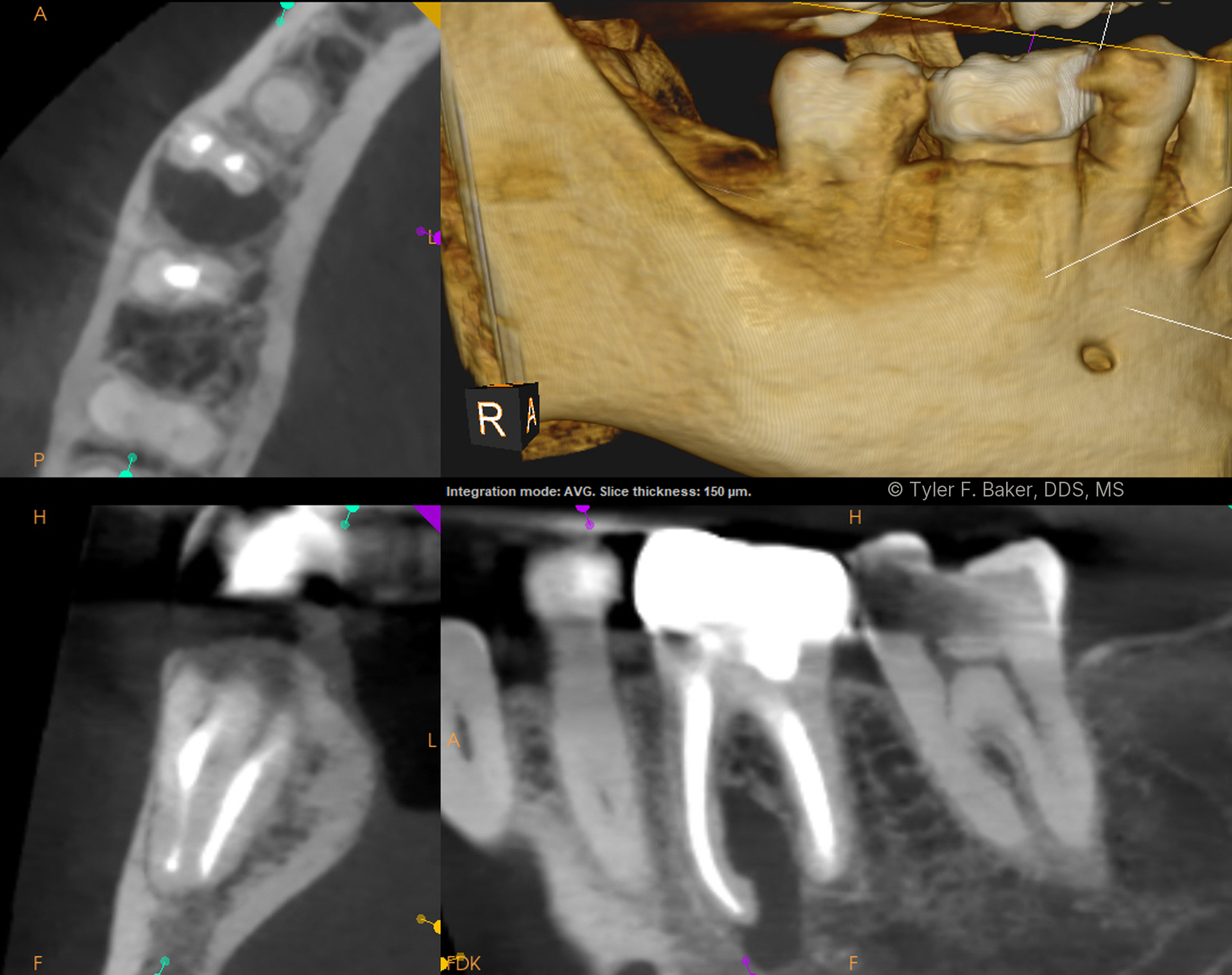
CBCT four-panel view
CBCT · 150µm · INTEGRATION MODE: AVG
Closer Evaluation Reveals Numerous Deficiencies

A different story emerges.

Cone-beam volumetric imaging reveals a reasonably large apical radiolucency and numerous deficiencies. It’s one thing to have a bad day. It’s another thing when endodontists charge for a premium product, yet the technology they employ is outdated and the technique they use lacks an understanding of the inherent iatrogenic risks.

SAGITTAL · MESIAL ROOT
FINDING 01 · IATROGENIC
Canals are not J or Coke bottle shapes
A constricted access forces the Gates Glidden and files toward the furcation, transporting the canal from the anatomical curves.
FINDING 02 · IATROGENIC
Apical zipping and ledging
Aggressive instrumentation transports the apical canal and packs debris into the apical and accessory canals.
FINDING 03 · IATROGENIC
Uncleaned apical 1–2 mm
For all the instrumentation, the most important portion of the canal is uncleaned, unfilled, and possibly dirtier than at the start of treatment.
Mechanical Failure · Mesial Root

An aggressive (ProTaper-style) file in a constricted access seals this tooth’s fate before the file enters the canal.

SAGITTAL · MESIAL ROOT · DISTAL SURFACE
FINDING 04 · BIOLOGICAL
External inflammatory resorption
A radiolucent oval defect along the distal surface of the mesial root marks active inflammatory resorption driven by an untreated lateral canal. Over-instrumentation of the canal probably caused increased blockage of the lateral canal — as we have shown, and as we will continue to show in future studies — needlessly removing root dentin in the name of better irrigation.
Biological Failure · Mesial Root

Uncleaned mesial fin and lateral canal
are destroying the root.

SAGITTAL · MESIAL ROOT · FURCAL ASPECT
FINDING 05 · IATROGENIC
Near-strip perforation, mesial root
The constricted access with aggressive instrumentation cuts toward the inside of the curve, thinning the dentinal wall on the furcal aspect of the mesial root to within microns of perforation. The excessive strain with instrumentation and weakened dentin make the root susceptible to a vertical root fracture.
Structural Compromise · Mesial Root

Near perforation and
excessively weakened root.

AXIAL · CROSS-SECTION · MESIAL ROOT
FINDING 05 · CROSS-SECTION
Perilously thin furcation dentin
The cross-sectional axial slice confirms the near perforation and excessively weakened root structure. Significant risk for furcation lesion and/or vertical root fracture.
Cross-Section Confirmation · Mesial Root

Two angles. One obvious conclusion.

SAGITTAL · DISTAL ROOT · FURCAL ASPECT
FINDING 06 · IATROGENIC
Near-strip perforation, distal root
The same protocol error replicated in the distal root. Both roots exhibit near-strip perforations and needlessly weakened roots.
Structural Compromise · Distal Root

A dense-appearing (primarily single cone) obturation falsely represents the
inadequately cleaned and weakened roots.

AXIAL · CROSS-SECTION · DISTAL ROOT
FINDING 06 · CROSS-SECTION
Same finding, axial view
The distal root cross-section mirrors the mesial. Same mechanism. Same near-perforation. The pattern is the protocol, not a one-time error.
Cross-Section Confirmation · Distal Root

Two makes a trend: Same mechanism. Both roots.

Closing Thoughts

The perils of appearance
over reality.
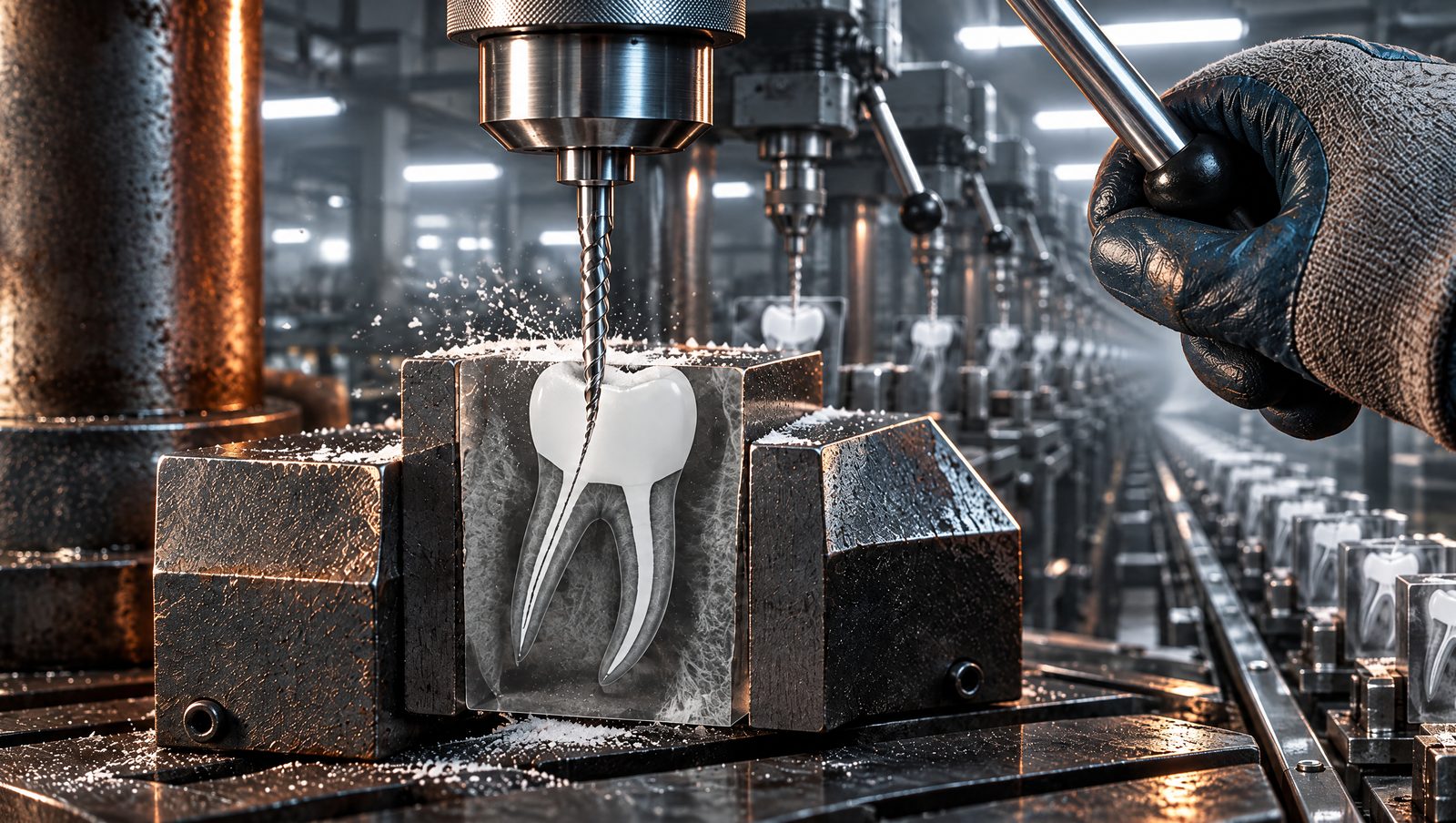
Illustration: a factory line of drill presses, each driving an endodontic file into an identical tooth
Illustration

The natural conclusion, after paying for “the best root canal treatment” and then watching it fail, is that root canals don’t work. This mill-style, mass-produced treatment may look good to some on an x-ray, and it may allow for quick in-and-out appointments, but ultimately it kills faith in endodontics — and in dentistry as a whole. This style of treatment is what drives patients toward alternative treatments and can set off a crippling dental cascade.

This reality is a big reason for this newsletter, and why I have been at the forefront of developing and implementing the latest techniques. Part 2, next issue.

As always, every image is from our own cases.
— Tyler Baker
Tyler F. Baker, DDS · MS
(760) 510-1133
tyler@bakerendo.com
bakerendo.com
955 Boardwalk · Suite 302 · San Marcos, CA 92078
← Vol. 03: Don't guess it's going to heal. Know it's going to heal.All Issues
Make An Appointment
CallMake An Appointment